Sabbatical Dispatch #2: Iona of My Heart
There is something special about the Isle of Iona.
Iona has been a Christian pilgrimage destination for over 1400 years, ever since St. Columba first established a monastic community here in the year 563. I am among the latest in a long line of pilgrims to arrive in this place, journeying across land and sea, seeking insight and inspiration. I was joined by about 40 other people, mostly from the United States, in addition to the Iona Community staff and volunteers.
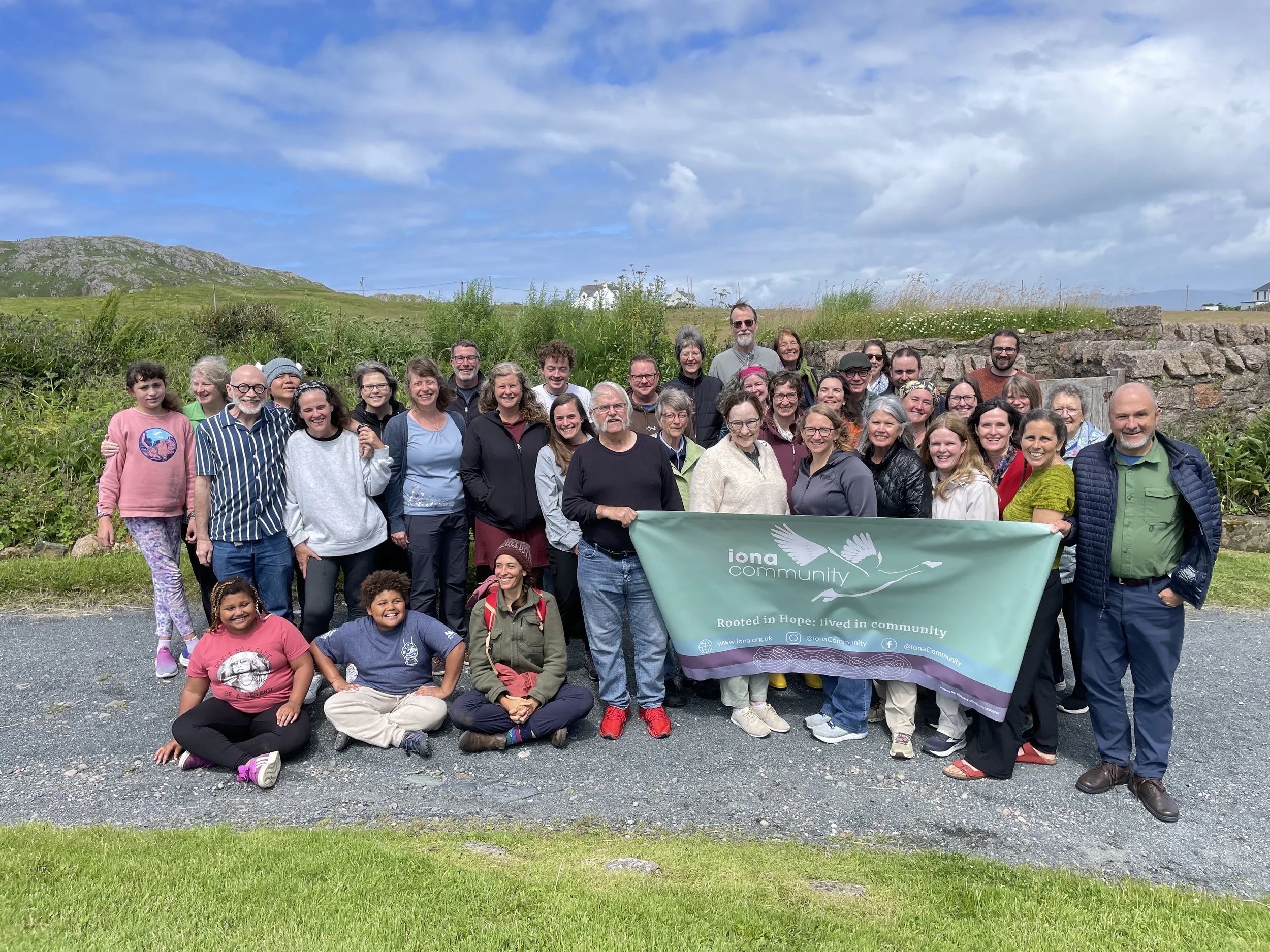
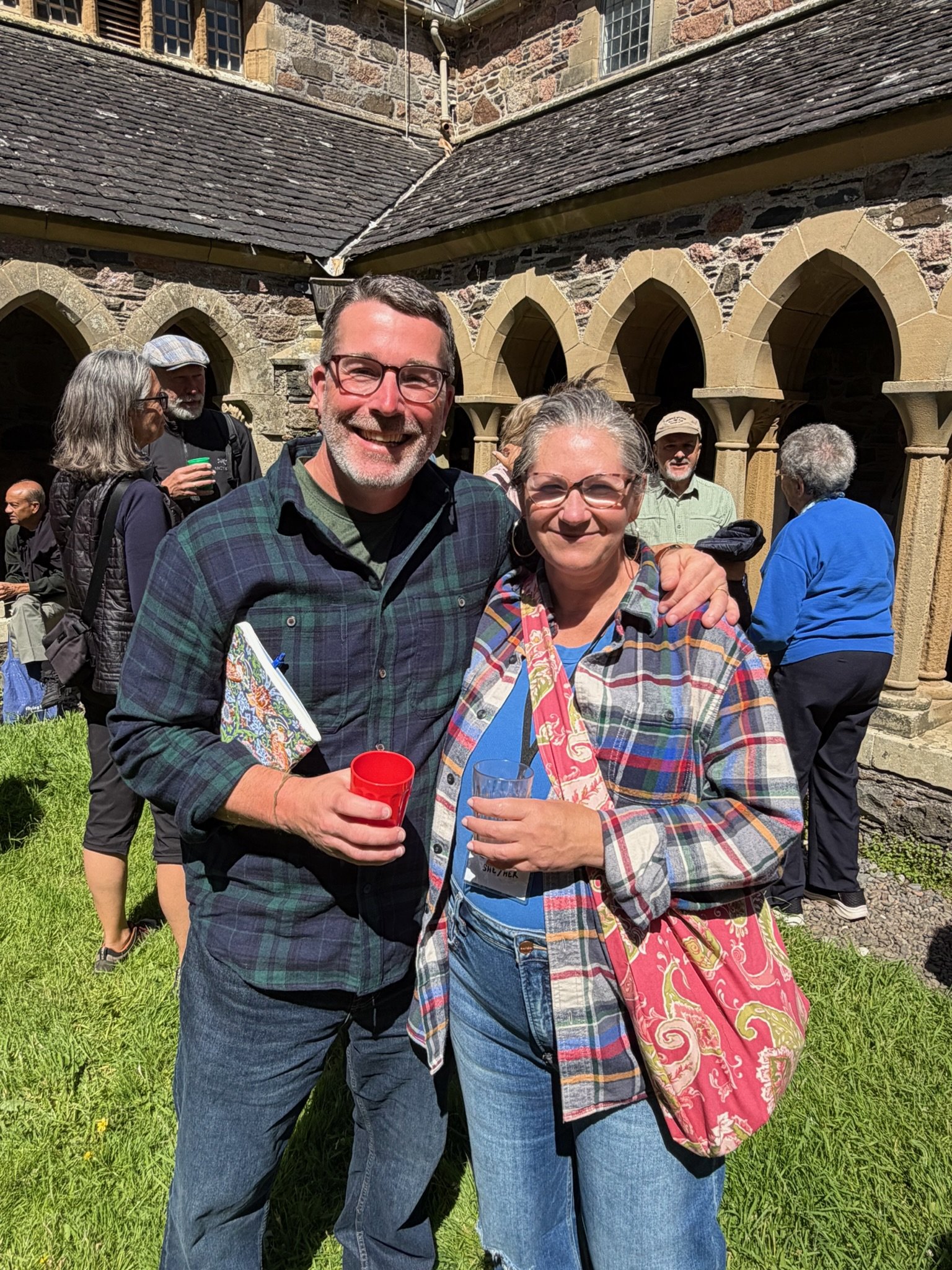
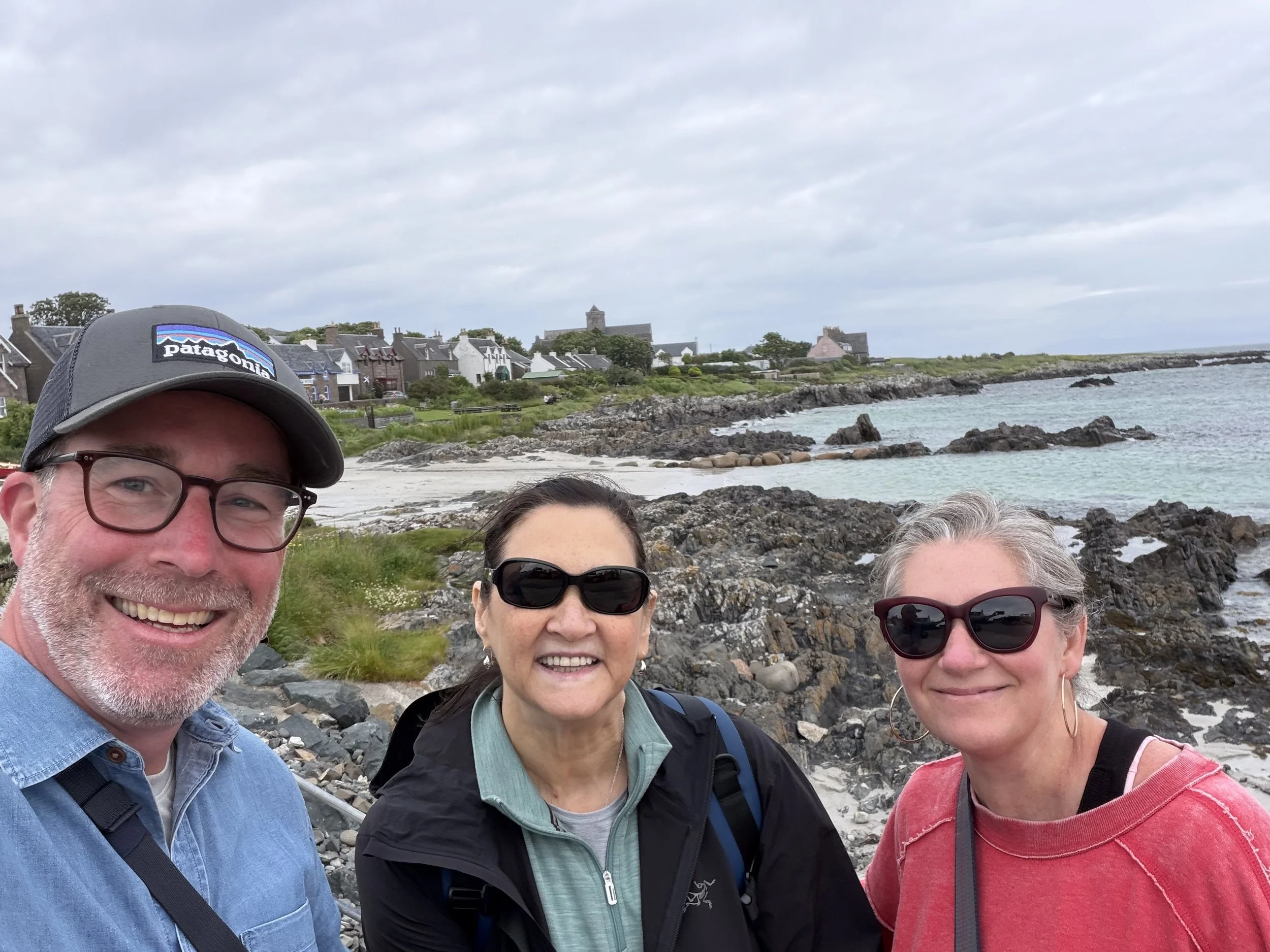
This was our group for the week. Among us were a group seminarians from Bethany Seminary in Indiana and a church group from a Presbyterian Church in Palo Alto, California.
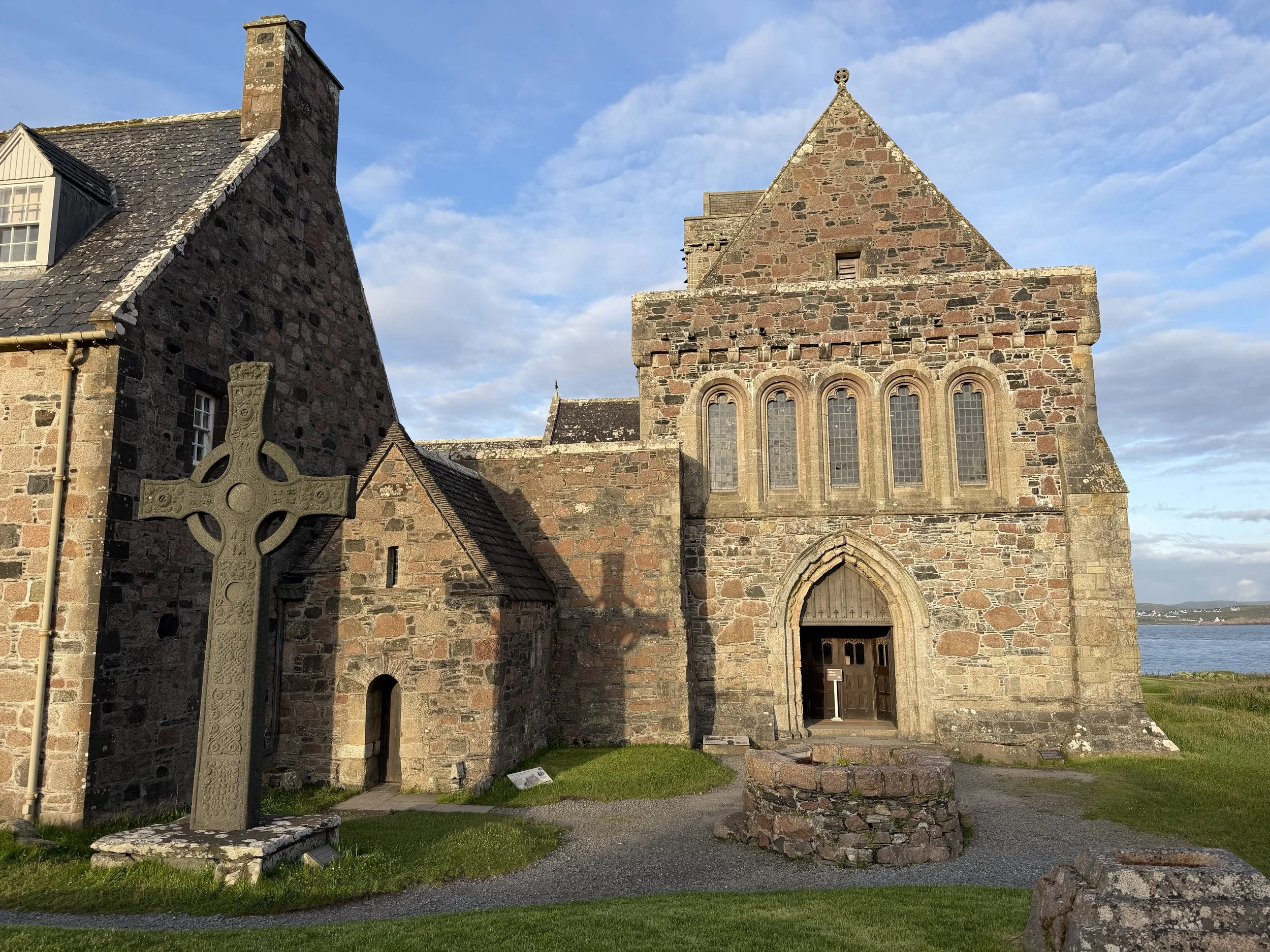
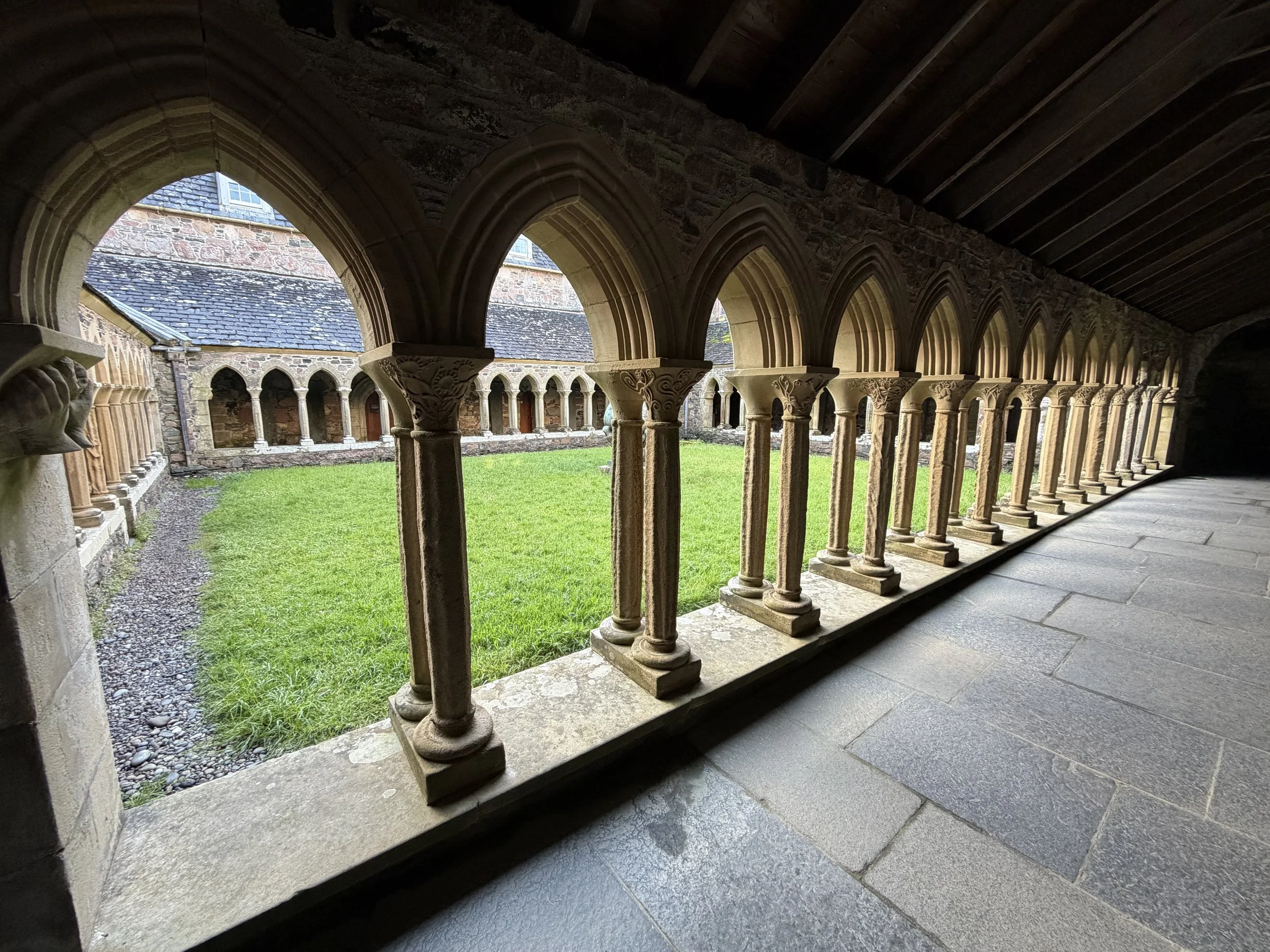
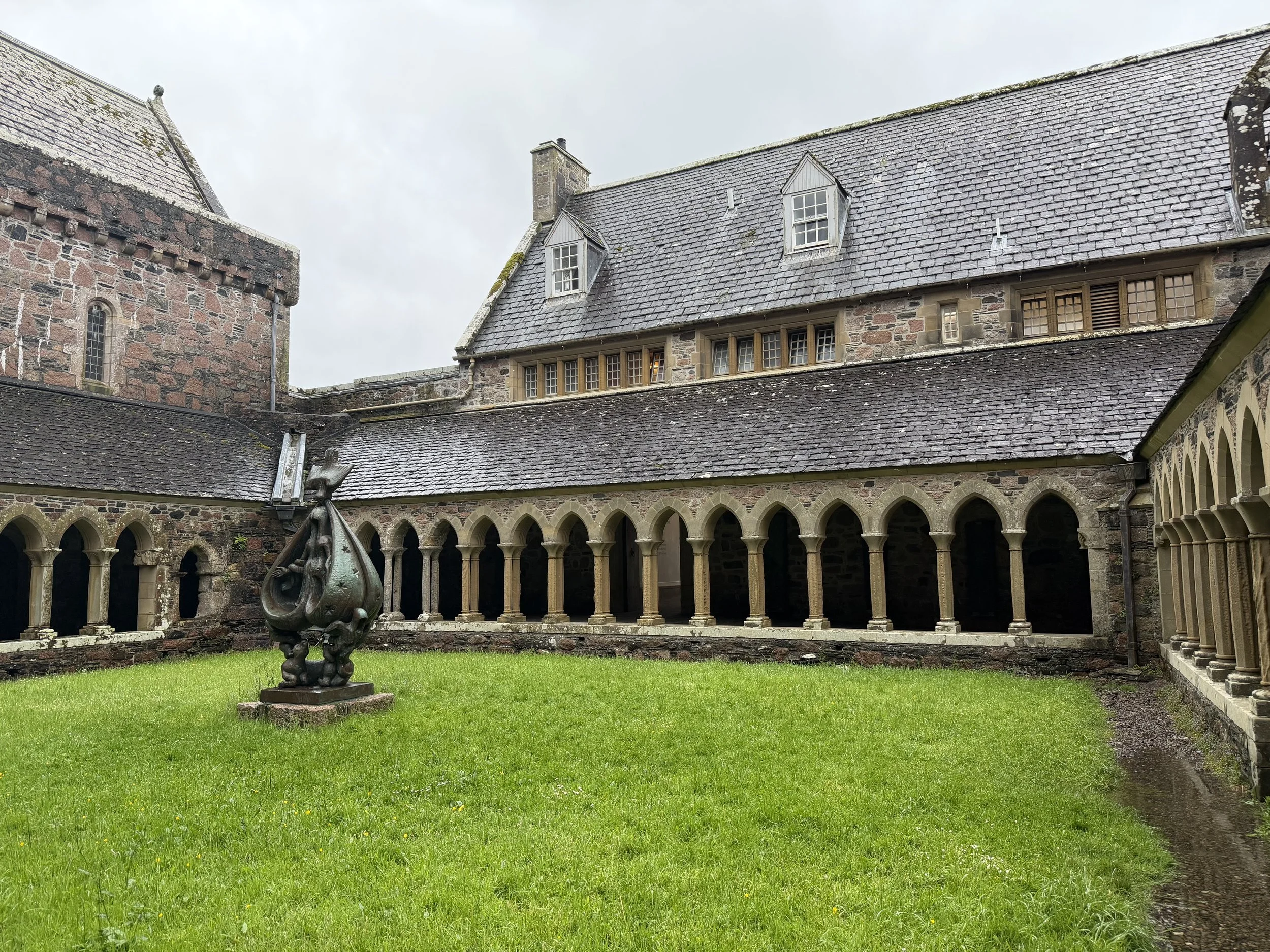
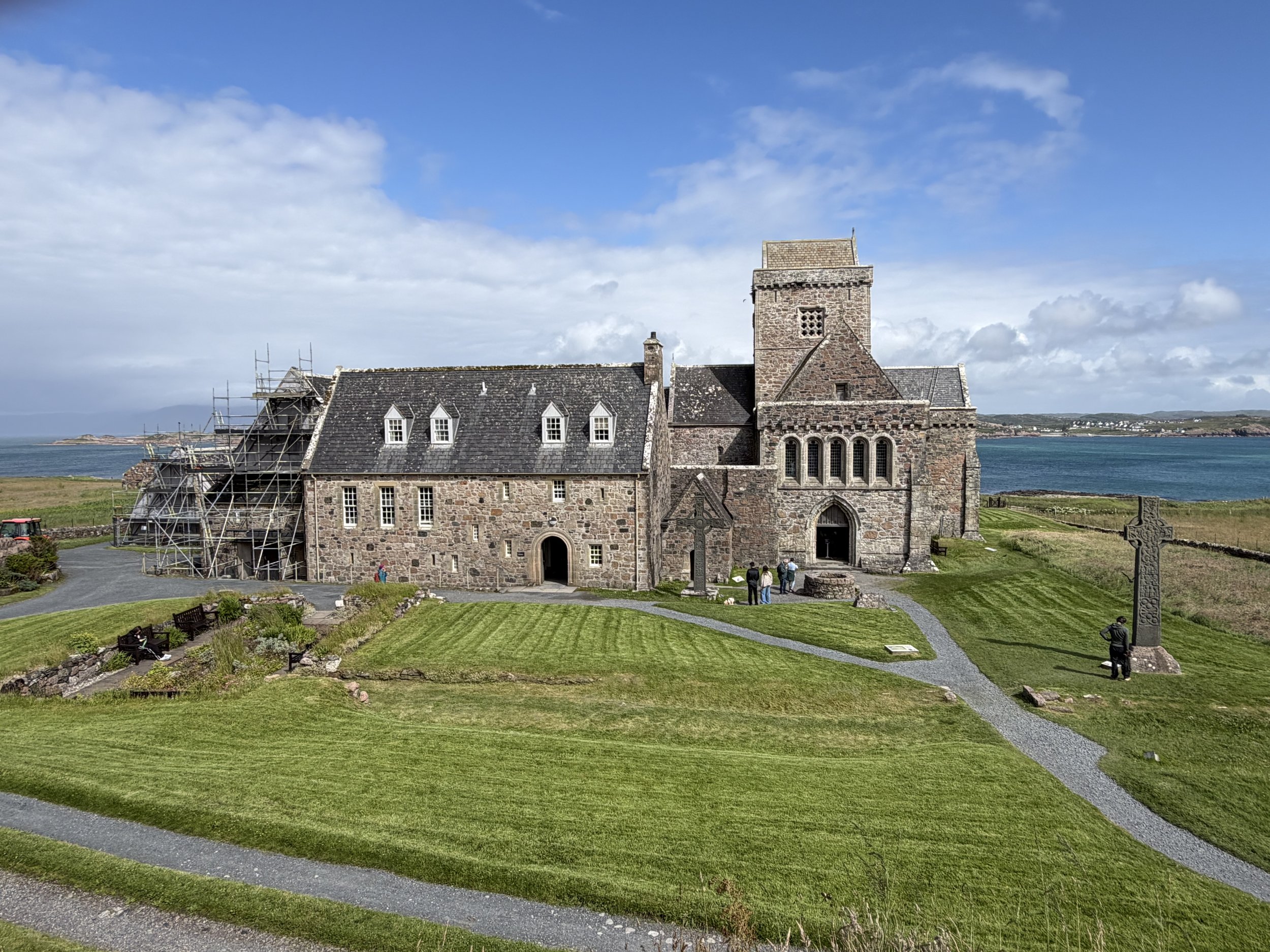
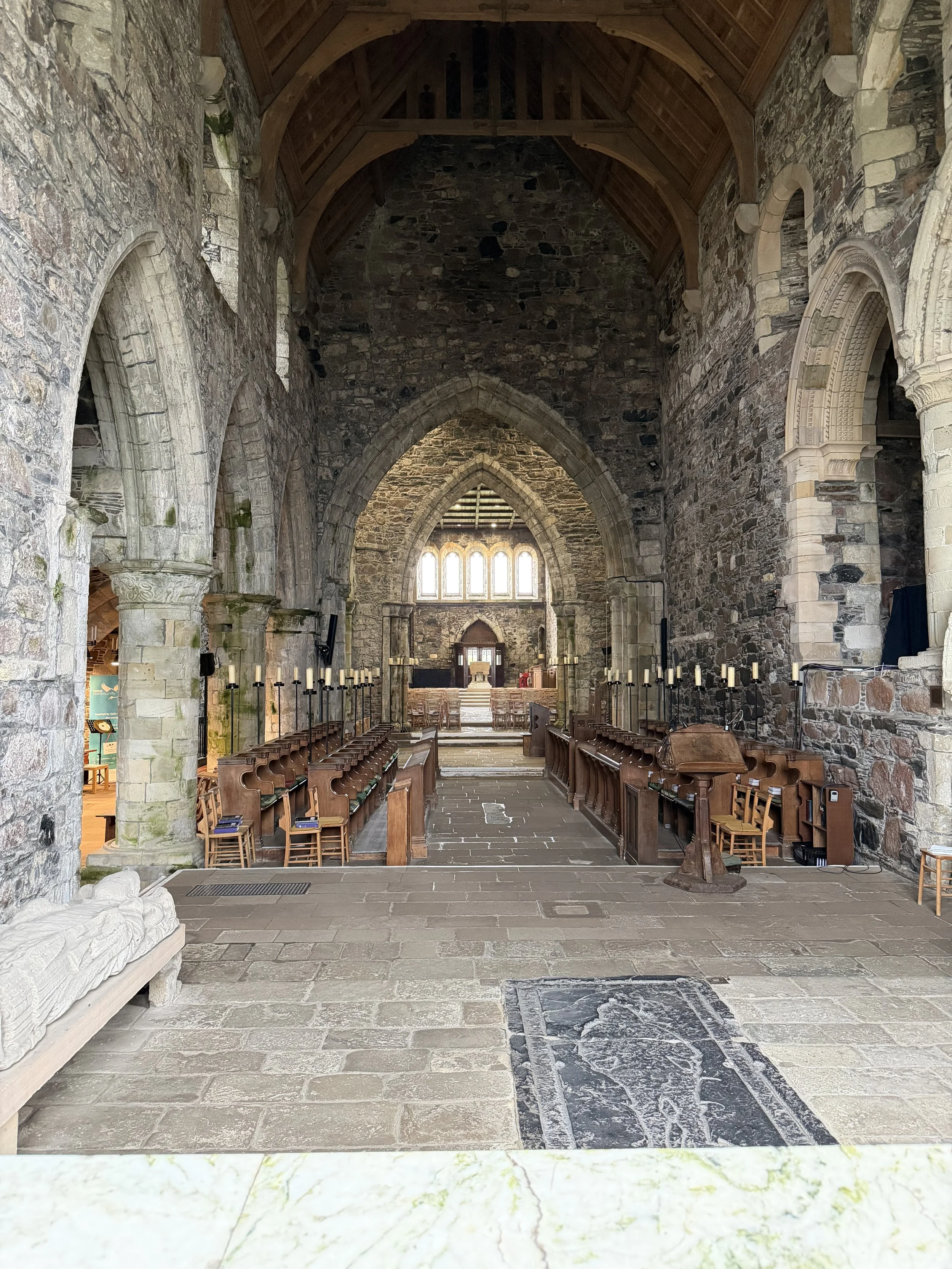
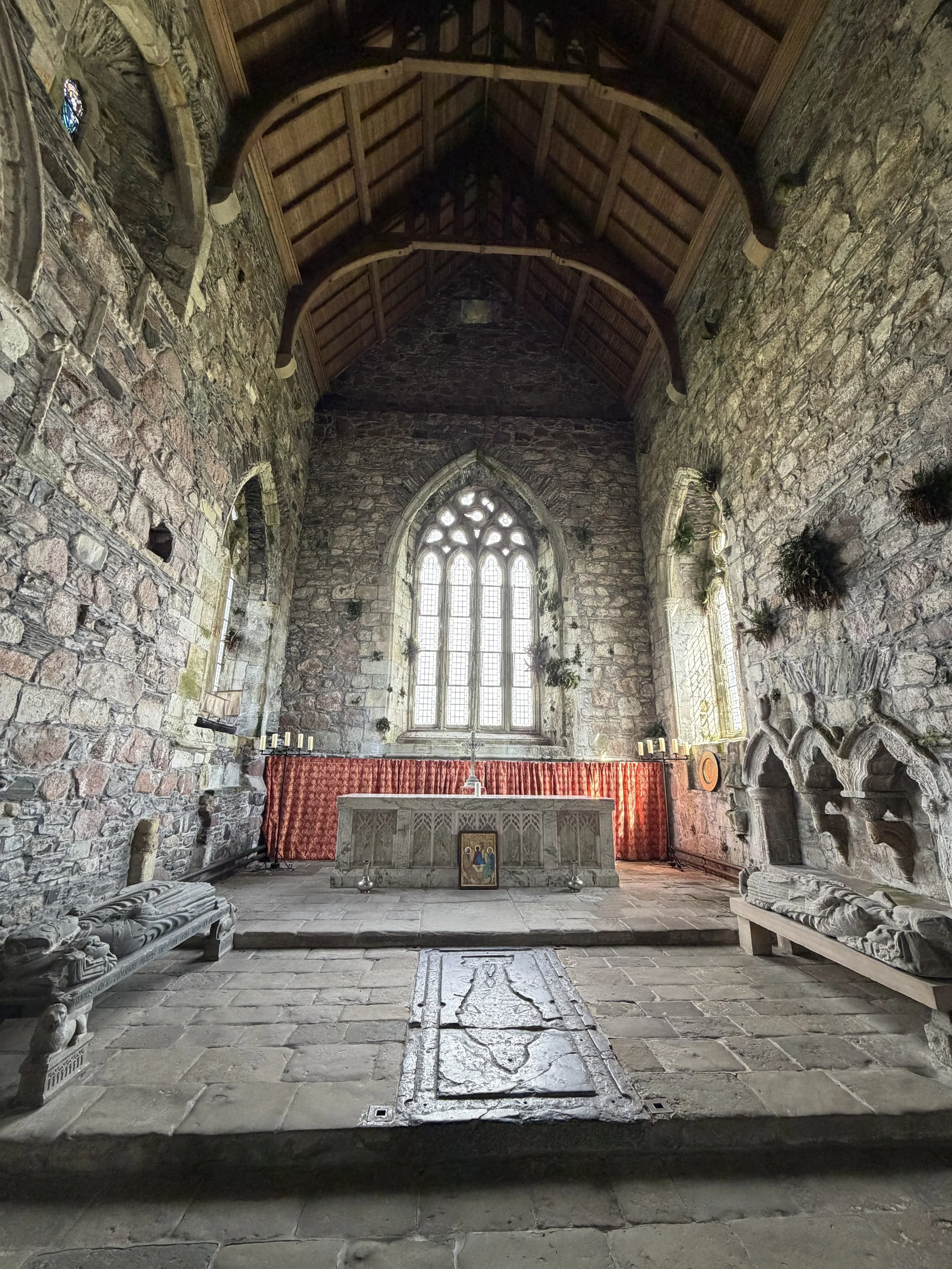
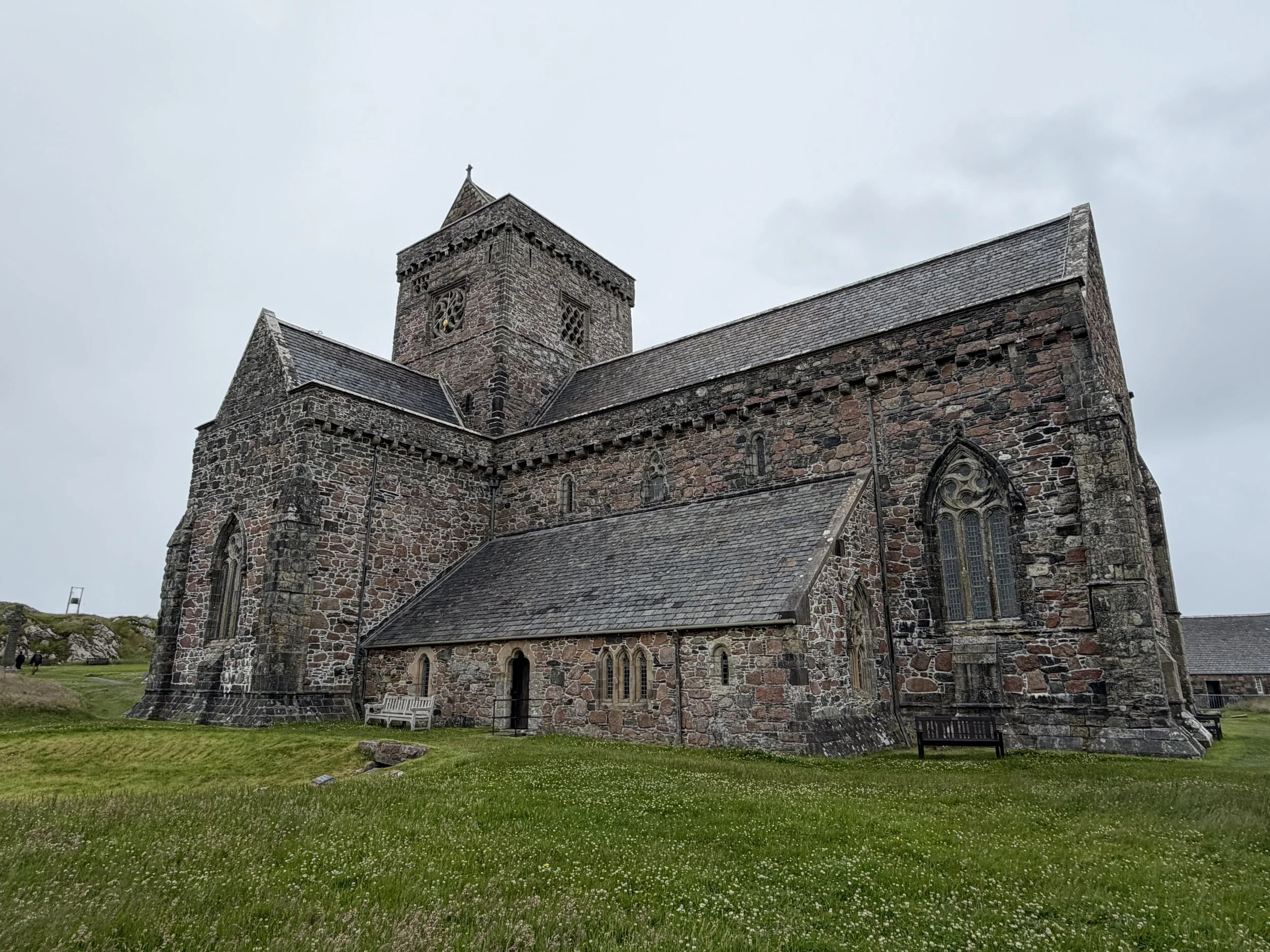
The church and abbey we that see today dates from the 1200’s when a Benedictine monastic order was established on Iona. These buildings later fell into ruin, but were restored in the early 1900’s under the leadership and vision of Rev. George MacLeod. MacLeod had come from a family of privilege, but his work as a pastor in the working-class neighborhoods of Glasgow convicted him that the church ought to do a better job connecting faith to people’s real life experiences. He believed that faith and action must go hand-in-hand.
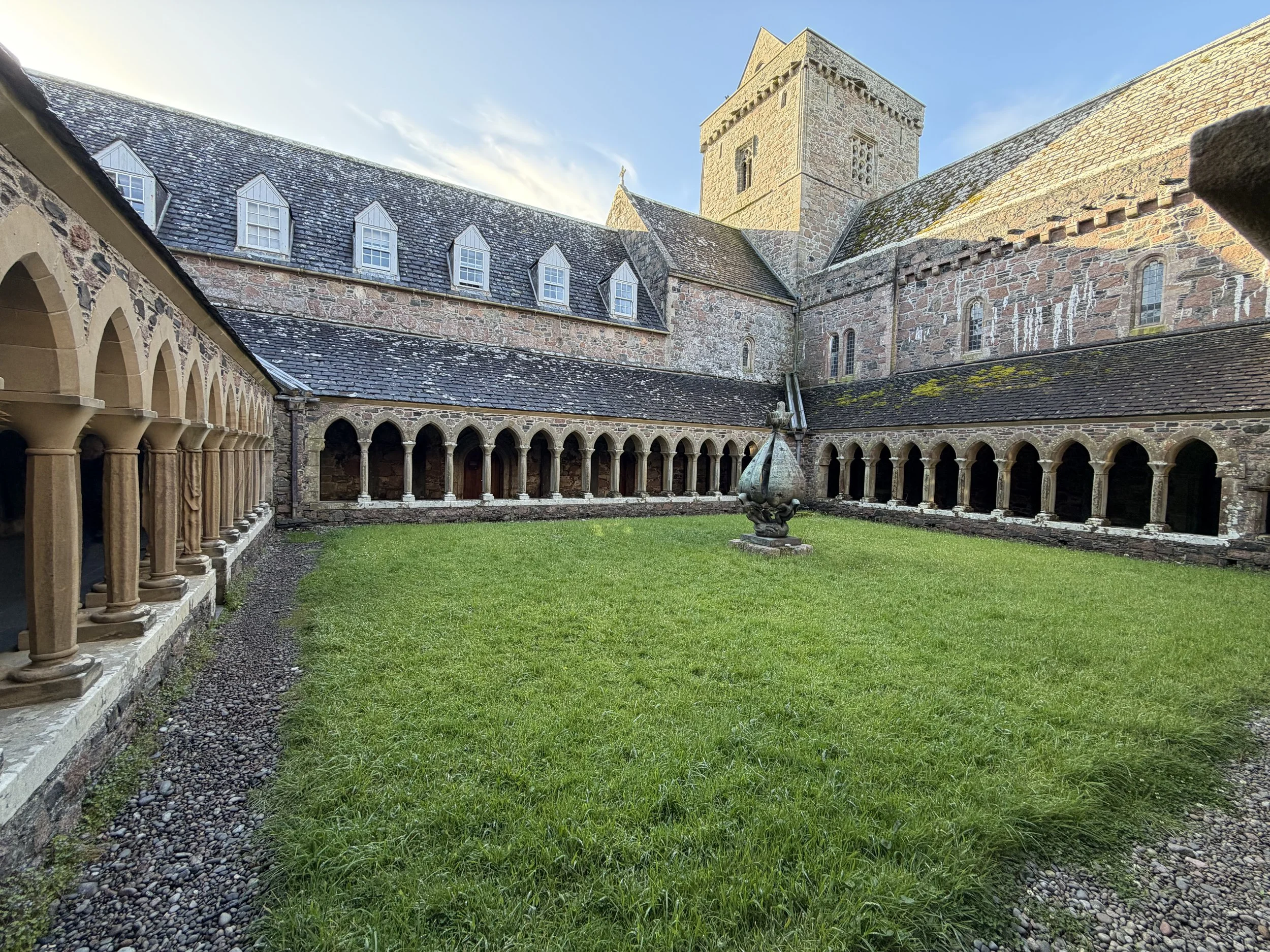
MacLeod brought unemployed workmen and ministry students to Iona to begin rebuilding the Benedictine ruins. They worked together, ate together, and worshipped and prayed together. This was the beginning of what would become the Iona Community, which is a Christian, ecumenical, non-profit organization that runs the programs at the Abbey and provides resources to the wider church. Those same patterns of worship, work, and community continue even now. The church and abbey (the buildings where the monks would have lived) were restored between 1902 and 1965. Today, they are maintained by Historic Scotland and leased for use by the Iona Community.
Daily Life at Iona
The rhythm of life on Iona traces back to the early days of the Iona Community, which itself was inspired by the monastic communities that once called Iona home. We worshipped at 9AM and 9PM each day. The 9AM service was a morning prayer service and the 9PM service had a different theme for each night, including silence, justice and peace, creation, healing, and commitment. Over the course of the week, guests of the Abbey helped lead parts of services. Outside of helping service communion on Sunday, I gladly refrained because I so enjoyed just attending and receiving worship. That was a true gift—as was the great food and hospitality shown to us by the Iona Community. It was so lovely to be cared for and nourished both physically and spiritually. Throughout the week, we attended sessions led by the Wild Goose Resource group, inviting us to reflect on the theme of “Holding On and Letting Go” (more on that below.) We also had ample free time to explore Iona and rest and reflect in our own ways.
Presence, Place, and Padraig
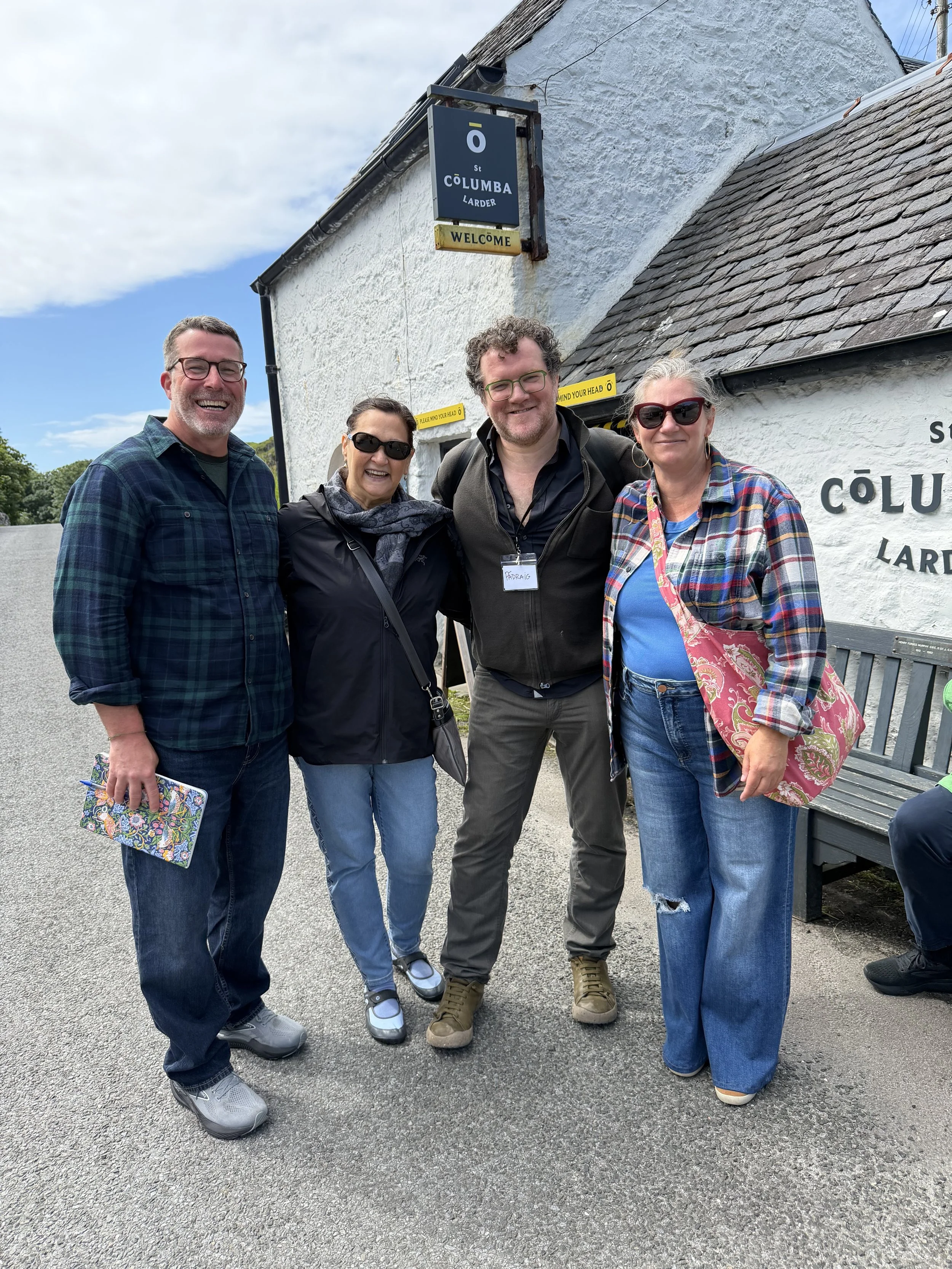
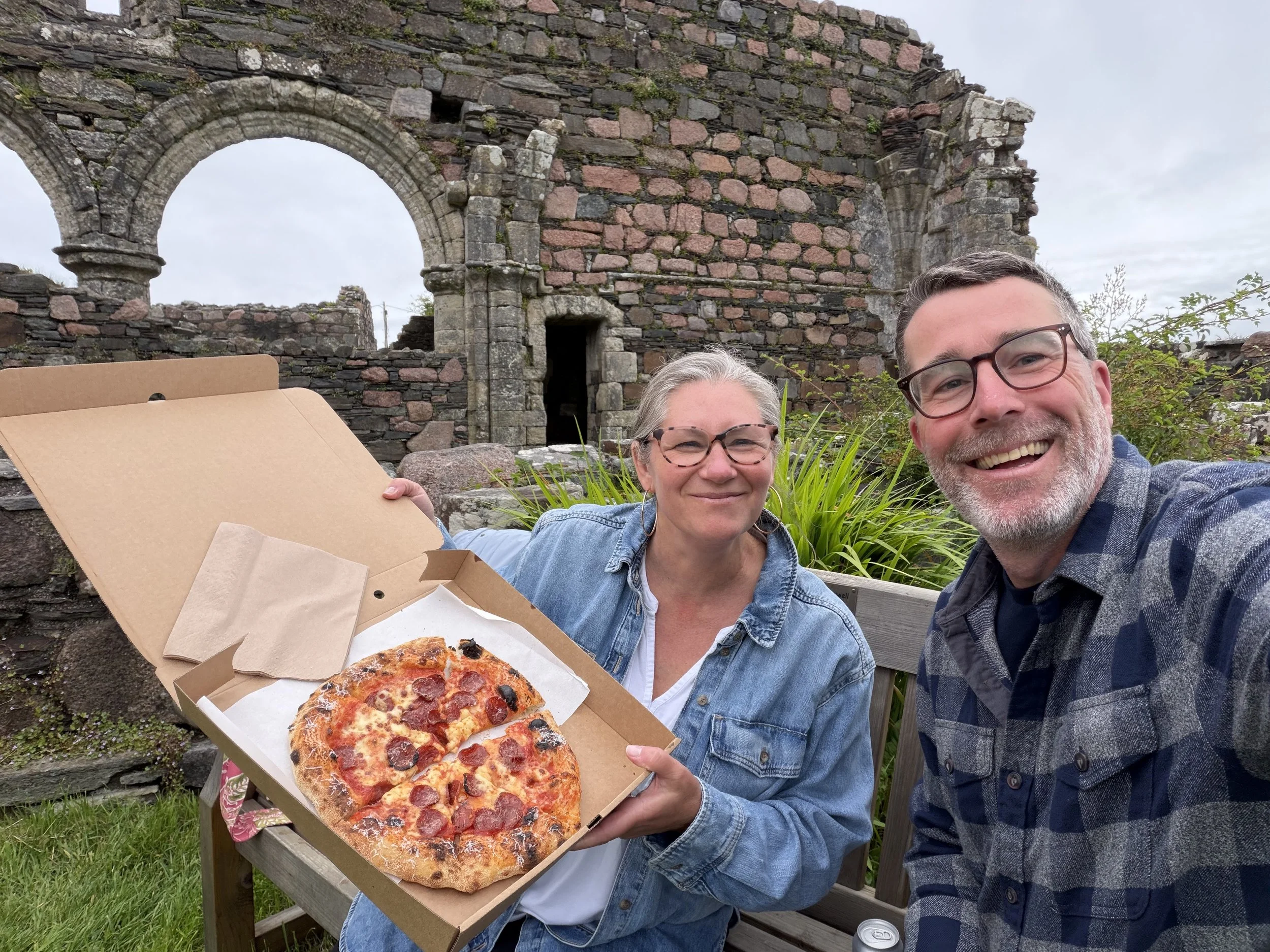
At the same time I was on my retreat at the Abbey, Jenny and our friend Stef, attended a program hosted by the Irish poet, Padraig O’Tuama. The theme of their program was “Presence and Place,” which they explored through poetry, and in conversation with local musicians, artists, and craftspeople. One of the highlights was attending a concert by Hanna Fisher and Soren MacLean, which featured traditional Gallic music—a clip is below. Jenny and I also celebrated our anniversary with pizza in the ruins of the old convent.
What Makes Space Sacred?
A question I return to often in places like Iona, the Camino de Santiago, the great cathedrals, and even our own church, is what makes a space sacred. Did someone just one day decide this was a holy site—or were they too drawn to something that was already there? At least on Iona, it seems to be combination of the geography, the history, the language, the culture, and the compounding effect of all those who have come before and continue to visit on the ferry each day. In her book, Sacred Power, Sacred Space, Jeanne Kilde writes about “substantive” and “situational” sacred space. The substantive approach associates sacred space with designated religious spaces, like a church or abbey. They are religiously sanctioned centers for worship, prayer, religious study and formation, and community. The situational approach recognizes how people shape and reinforce that sacrality. Both are very present on Iona.
Holding On and Letting Go
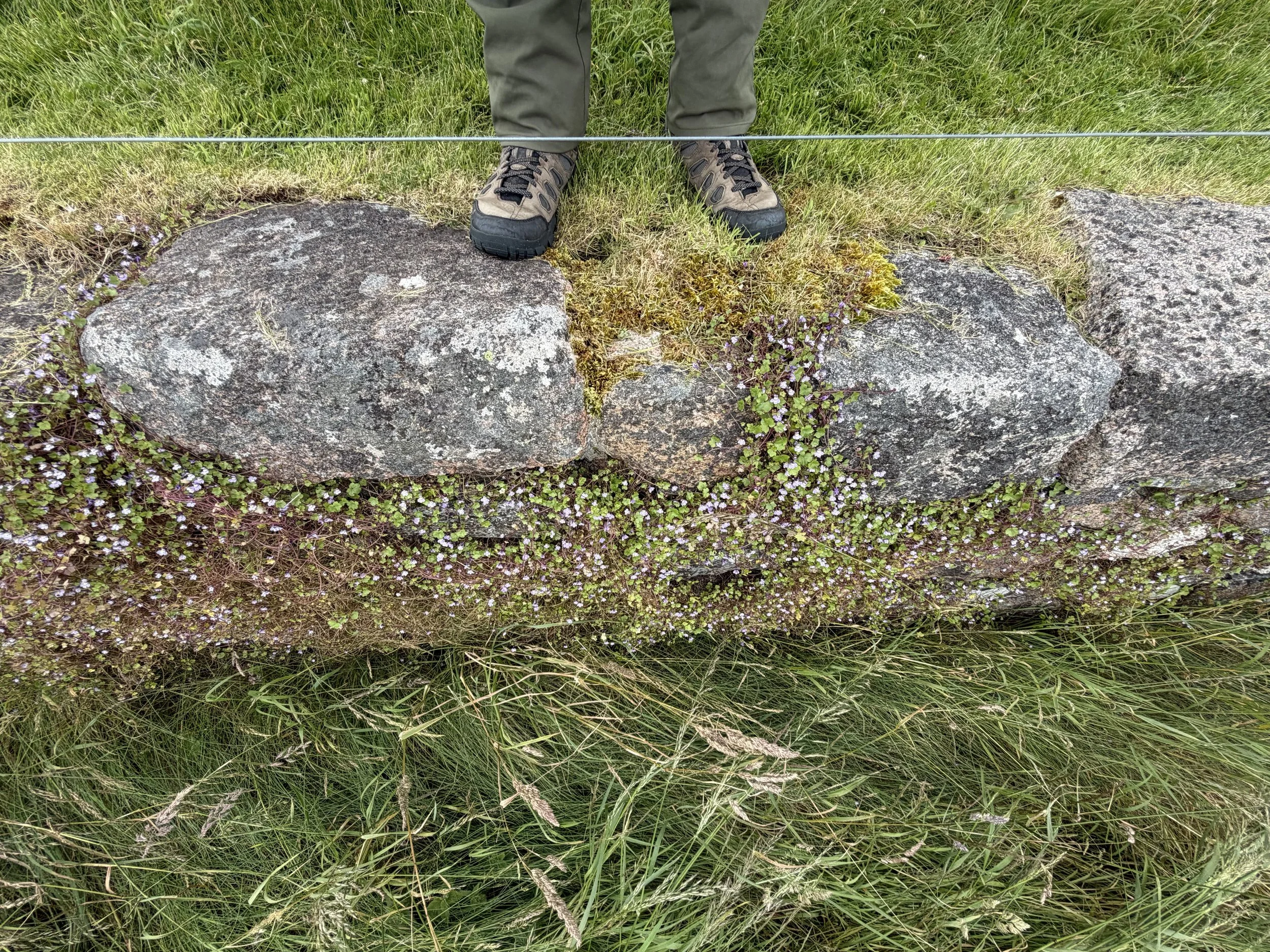
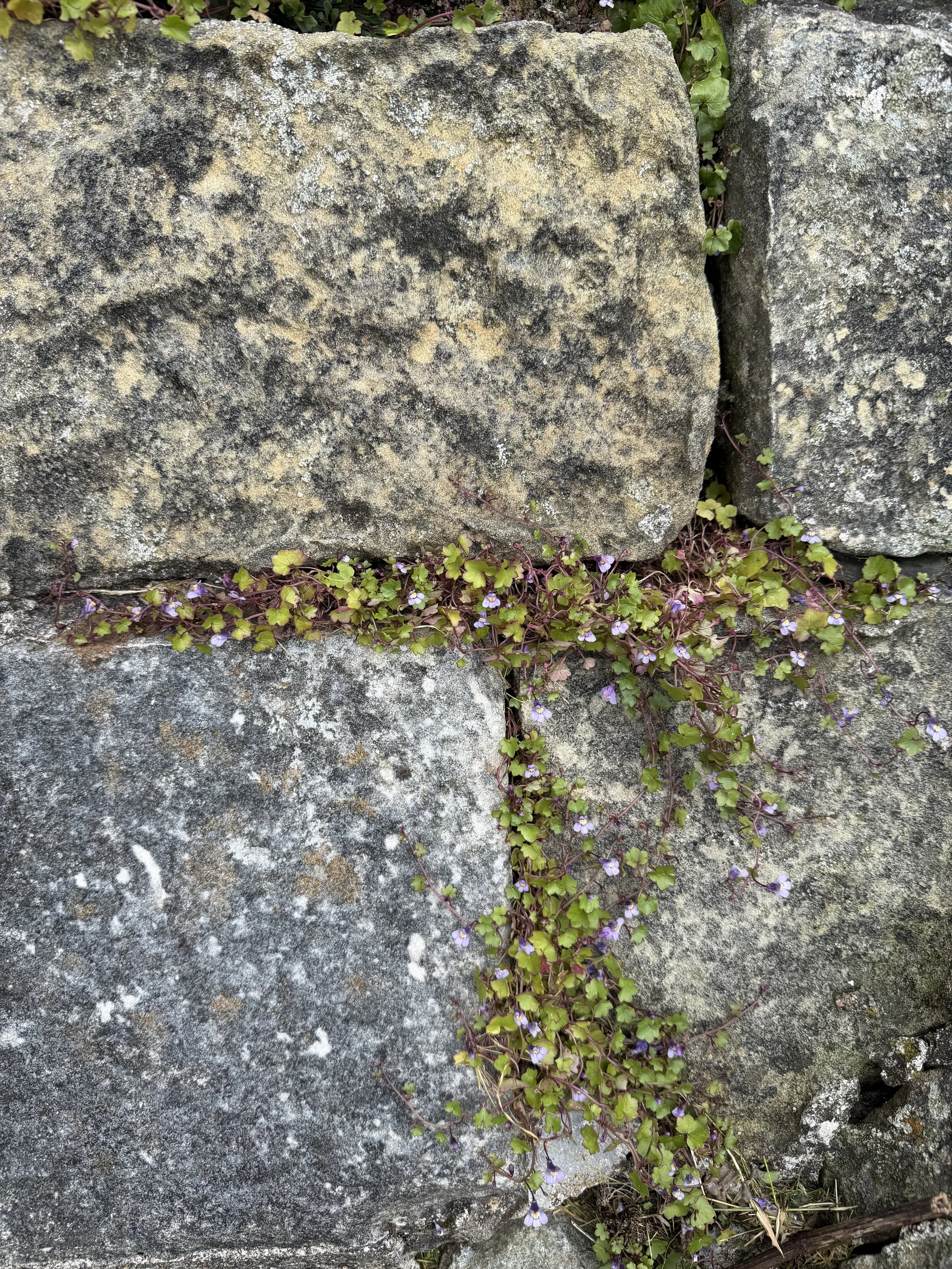
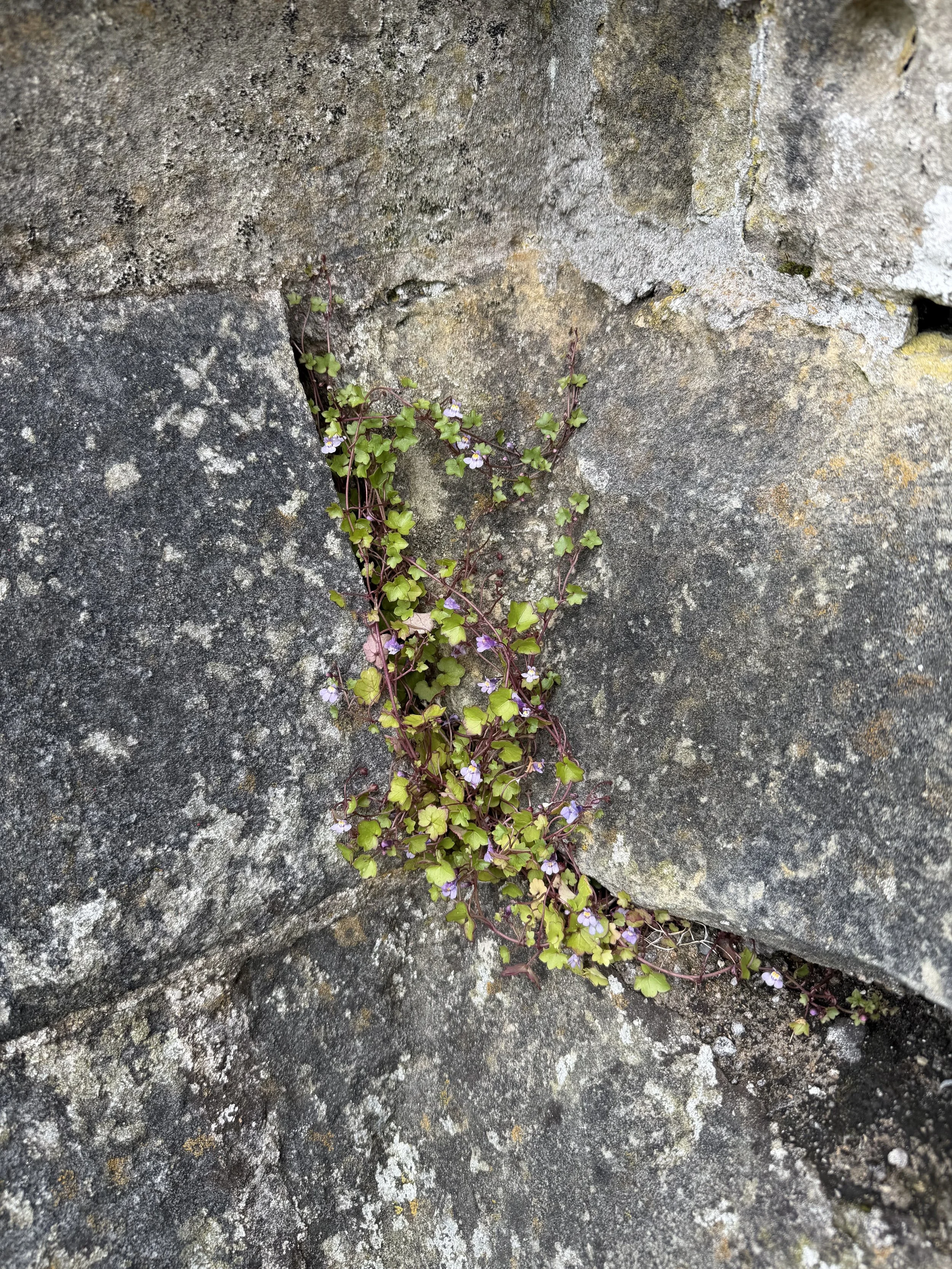
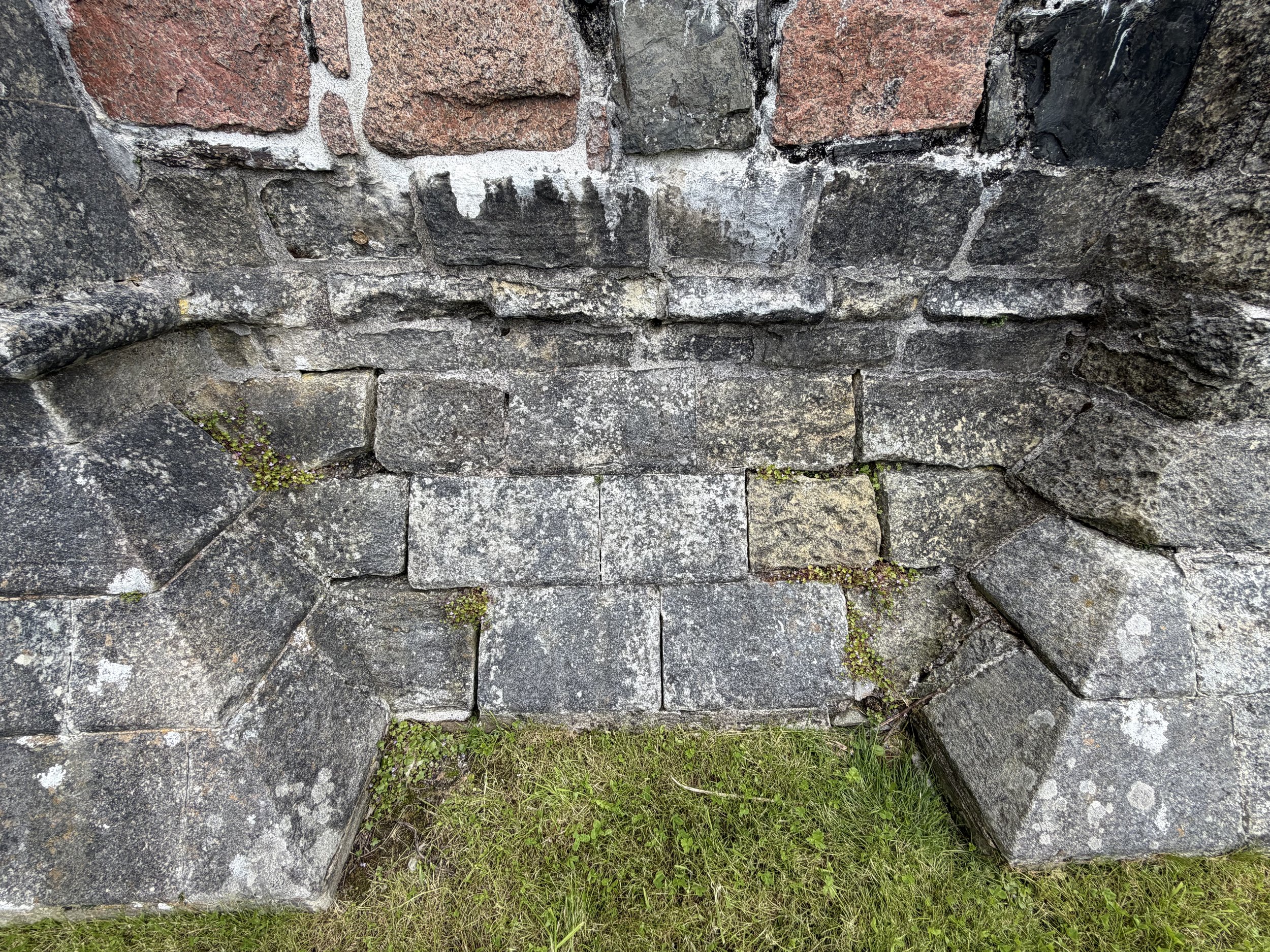
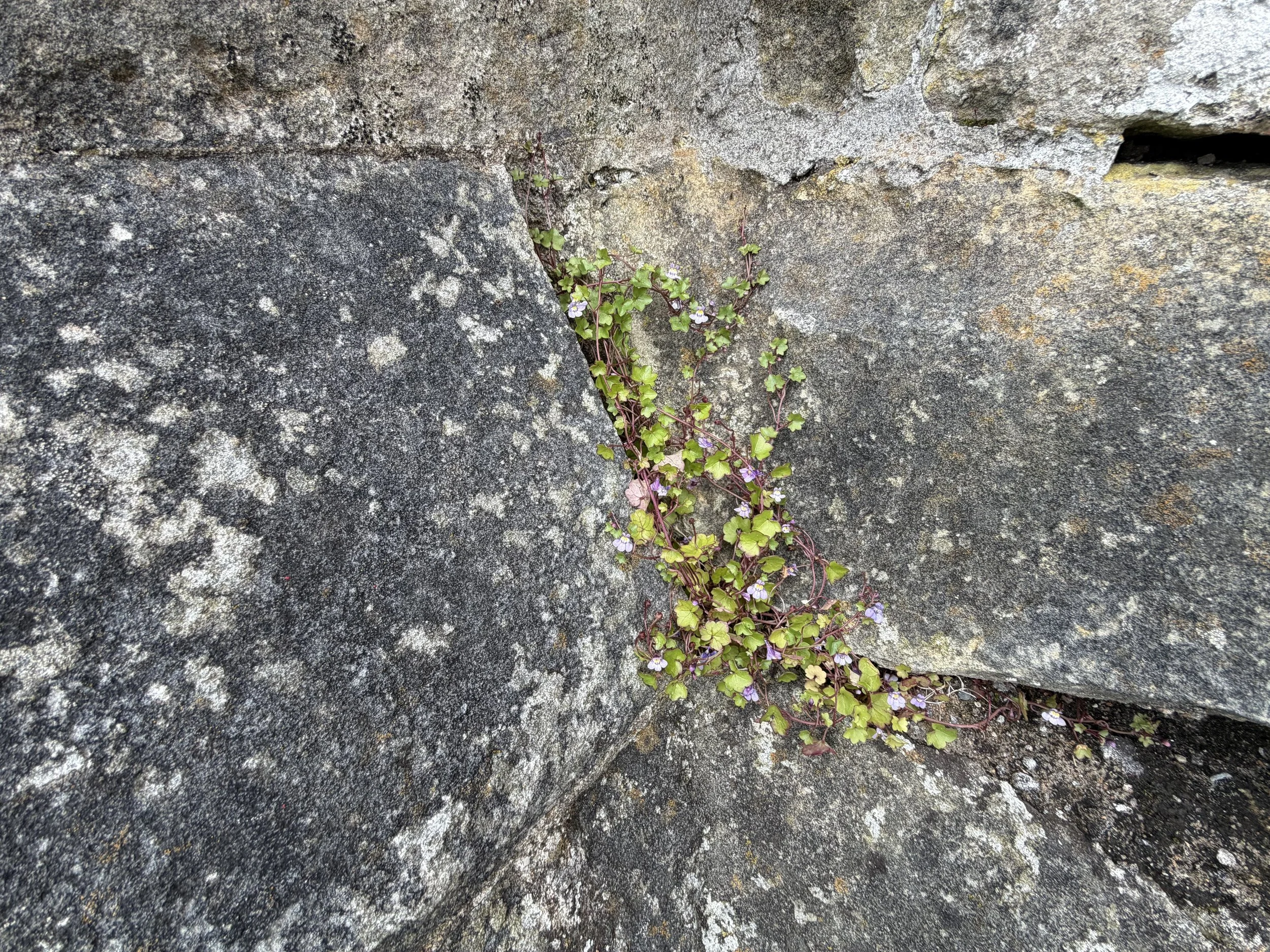
Our theme for our Iona program was “Holding On and Letting Go,” which was perfect for me. Going into the sabbatical I was very focused on the things I wanted to let go. I was less focused on the things I wanted to hold onto. However, on the last day of our program, we were invited to walk the grounds of the abbey and reflect on the theme. There, I encountered ivy-leaved toadflax growing in a rock wall and then in the stones of the abbey church. Its seeds are remarkably adapted to finding crevices in masonry. It literally holds on, finding life and bringing beauty to the smallest of places. And I realized that while I did want to let go of some things, the things that I to hold onto are so much more, vastly more. It reframed my whole sabbatical. I did leave a stone in the abbey church as a symbol of what I wanted to let go of and I feel that I was able to leave it there.
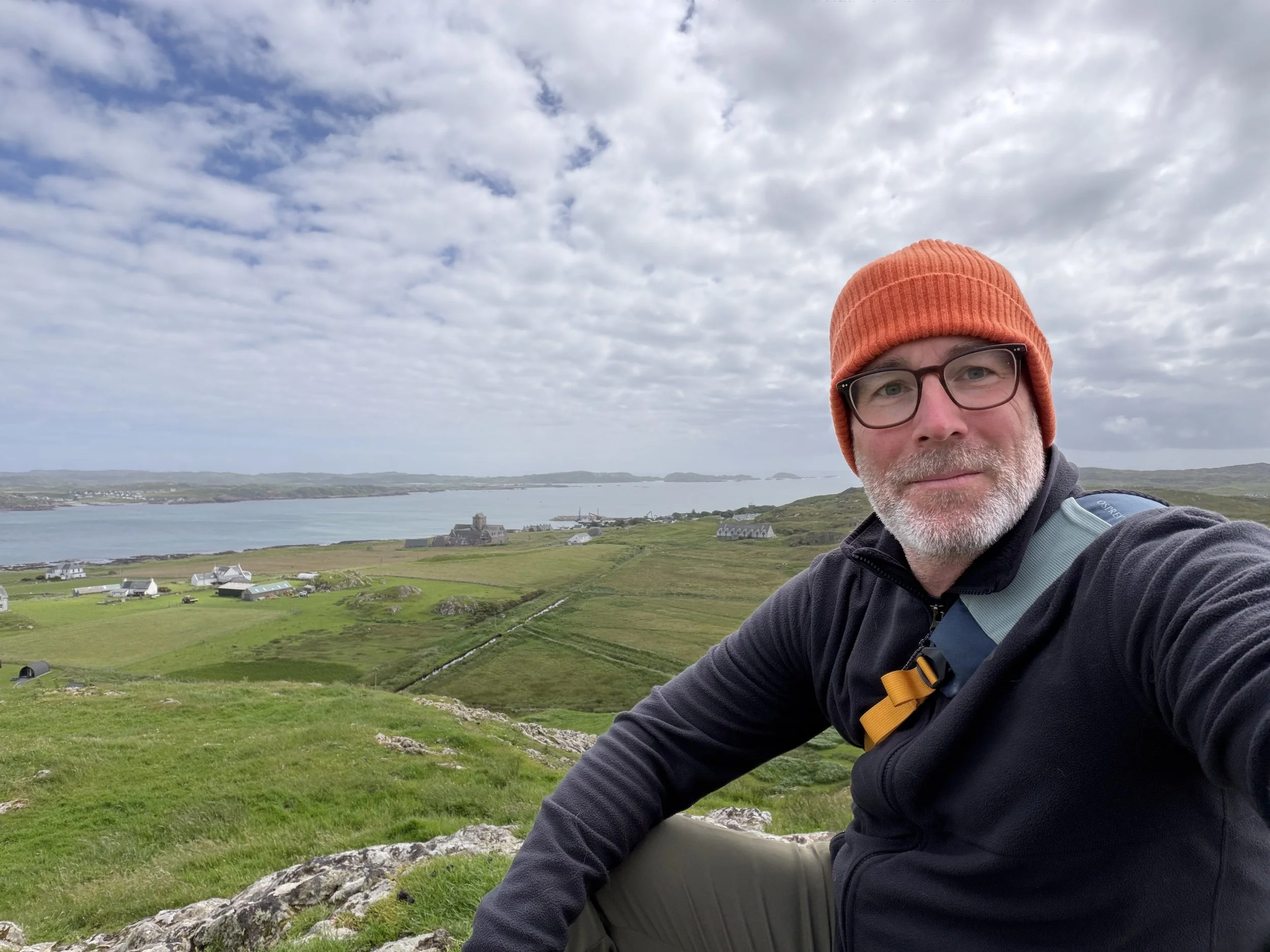
Finally, this was my view from Dun I, the highest hill on Iona, on my last full day—an uncharacteristically sunny and clear day. Here, you can see the Abbey in the background and Mull across the Iona Sound. From here, we were off to Ireland! More to come.