
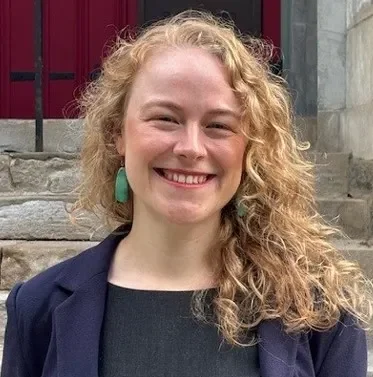
Professor Leslie Virnelson from United Lutheran Seminary leads our 2026 Lenten Study
Our Lenten Study Gathers Sunday Mornings March 1, 8, 15, and 22 at 9:30AM in the Steffens Room
Our Lenten Study will be led by Professor Leslie Virnelson from United Lutheran Seminary. These four Sunday sessions will be based on her forthcoming book, Fruit of Her Hands: Women, Work, & Society in the Hebrew Bible (Oxford University Press, 2025), which explores how specialized roles for women are reflected in the texts of the Hebrew Bible, focusing on four: midwives, diviners, weavers, and sex workers.
About Professor Virnelson
Dr. Leslie Virnelson teaches courses in Hebrew Bible and Old Testament. Before joining ULS, she taught as an adjunct at Princeton Theological Seminary, Princeton University, Mercer University, Union Theological Seminary, and Union Presbyterian Seminary. In 2024-2025, Dr. Virnelson was a Democracy Fellow at Interfaith America, where she worked with the Civic team to support communities and people of faith building bridges across religious and political divides, promoting trustworthy information about the political process, and engaging in interfaith civic projects for the common good. She also served as the interim director of the Center for Theology, Women, & Gender at PTS from 2020-2023, organizing events and curricula to educate public and scholarly audiences on the intersections of religion and gender.
Her forthcoming book explores how specialized roles for women are reflected in the texts of the Hebrew Bible, focusing on four: midwives, diviners, weavers, and sex workers. It investigates the practice of each role in the ancient world and its corresponding portrayal in biblical texts, incorporating linguistics, material culture, comparative literature, and ethnography. Dr Virnelson uses queer and feminist theories to situate the investigation of individual roles into a broader discussion of how ancient societies organized gendered labor and how ancient texts portray women’s roles. The value of women’s knowledge and labor is highly contested in the present day, so this work reflects on how modern debates over “women’s work” shape our understanding of ancient texts.